

Of Recent Interest
Civil War era Valentine
Valentine from Thomas Hickey to Johanna Joy 1856:"Valentineswiss replica watchesSince i'm in love with you i findmy bellows they have lost their...
MOREClassical Indian Music at the 'first' Cabin Fever Concert Series!!
Saturday, Feb 25 from 4 to 6 PM Rob Morrison and Tomek Regulsk will be performing classical Indian Sitar and Tabla music at the...
MORERUTH GARNER TURNING 100 ON NOV 18
RUTH GARNER turns 100 on Nov 18th. Pictured here, in 1980, at the Grand Re-Opening of the P&C (?). Can anyone ID the others in...
MOREPotsdam Pee Wee Hockey 1966-67
Travelling in one region to a different has elevated greatly within the last couple of decades. Maybe that's why makers contemplate it vital that...
MORERaymond - Knowles - Clarkson - Thatcher - Sisson - Richards - Crane - Hosmer - Snell - Dart
POTSDAM: PURCHASE AND SETTLEMENT
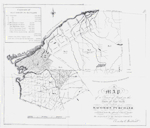 The St. Lawrence River Valley, including the area that is now Potsdam, was originally the hunting grounds of Native Americans, specifically the Iroquois. In 1787, in an effort to fortify the NY-Canada border and provide safe passage for travelers, Potsdam and nine other towns in St. Lawrence County were deeded for sale and settlement by the New York State Legislature.
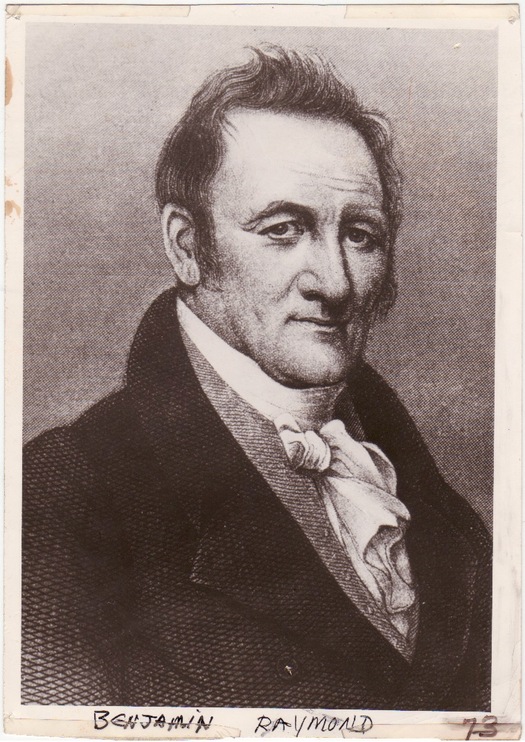
Named for the capital of Prussia, Potsdam passed through the hands of several owners before David Clarkson and associates of New York City purchased it in 1802. By 1803, Benjamin Raymond, a surveyor and agent for the purchasers, had begun a settlement on the banks of the Racquette River.
Quoted from Images of America, POTSDAM
Arcadia Publishing Company 2004
BUILDERS
 Potsdam citizens who recognized the value of the river, the land and native sandstone deposits, envisioned the possibilities for their community. Some had the means to create businesses and to provide opportunities for others in the areas of farming, manufacturing and public service.
Potsdam was first settled in 1803 by Benjamin Raymond, a surveyor and agent for the Clarksons and associates.
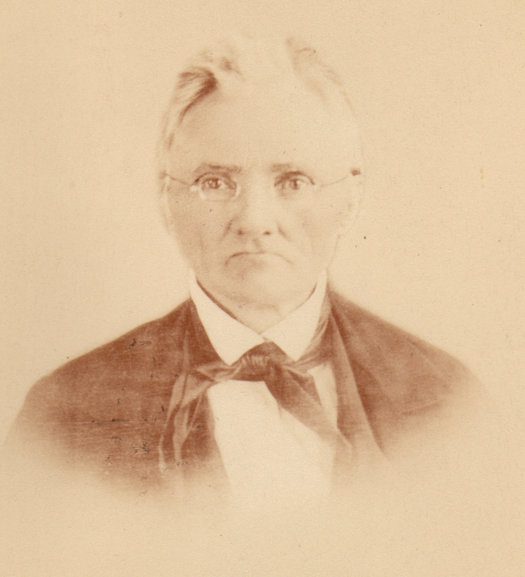
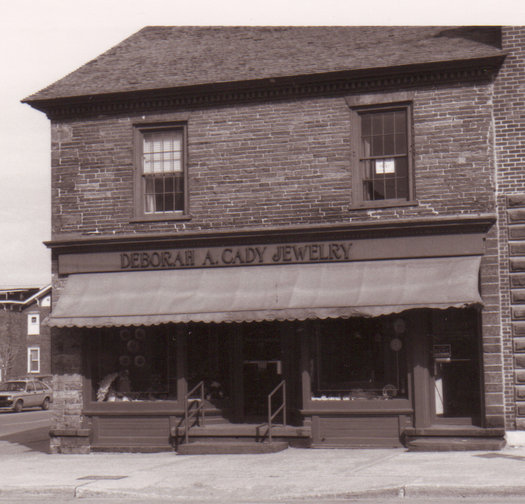 Liberty Knowles (1784-1859) was Potsdam’s first lawyer. He can be credited with helping to found the St. Lawrence Academy, building the first two-story house in Potsdam, and setting out many of the elm trees which lined the village streets. He moved to Potsdam from Connecticut in 1809, and married Melinda Raymond, sister of Benjamin Raymond. In 1821, Liberty Knowles, Sewall Raymond and Charles Partridge built Potsdam’s first sandstone building. It was on the corner of Market and Elm Streets and was considered to be an experiment to determine if sandstone was suitable for public buildings. The building still stands today.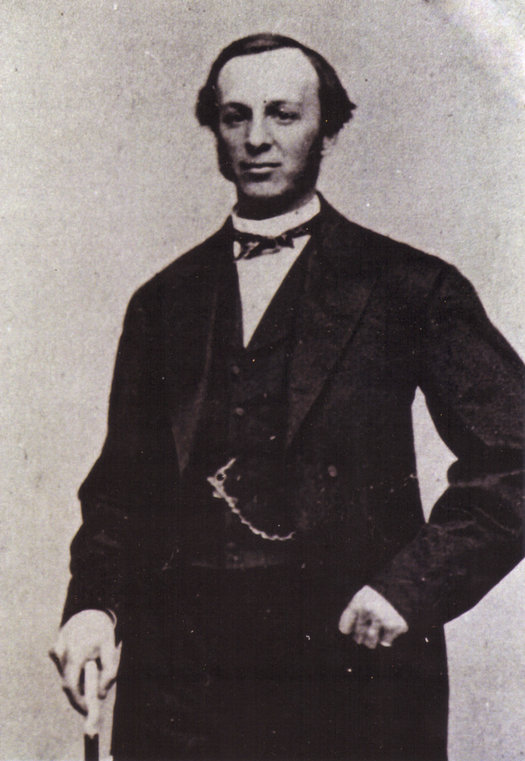
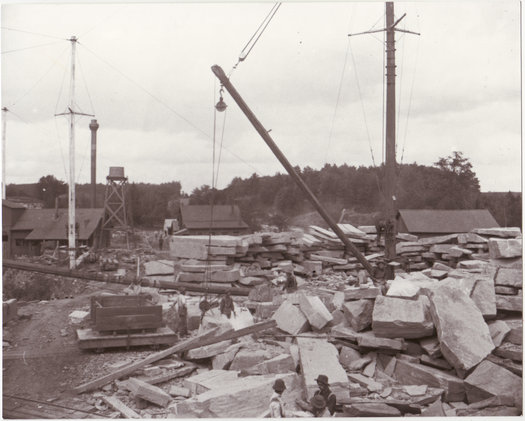 Thomas S. Clarkson (1837-1894) was educated locally, attending St. Lawrence Academy and finishing his education with tutors. Though the Clarkson family had accumulated wealth in stocks and property in New York City, all the Clarkson men learned a trade. Thomas and his brother Levinus (1835-1876) ran the Clarkson Farm of over a thousand acres until the death of Levinus. At this time, Thomas S. gave up farming and began to devote more of his energies to various business ventures in Potsdam, including the development of the first electrical power plants in the area and the installation of the first village sewer system. His most important business involvement was with the sandstone quarries. Along with valuing hard work, Thomas S. Clarkson also recognized the importance of culture in daily life. He and a cousin organized the Potsdam Public Library and Reading Room, and also operated a tuition-free night school to teach the rudiments of mechanical drawing. On August 14, 1894, Thomas S. Clarkson was the victim of an accident at his sandstone quarry. He died five days later.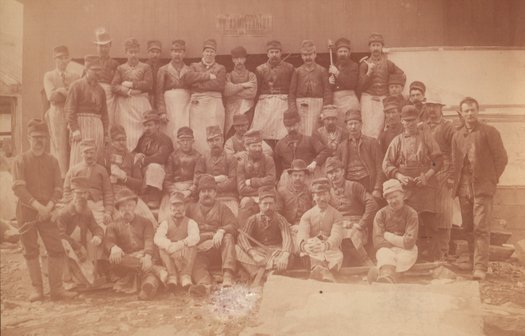
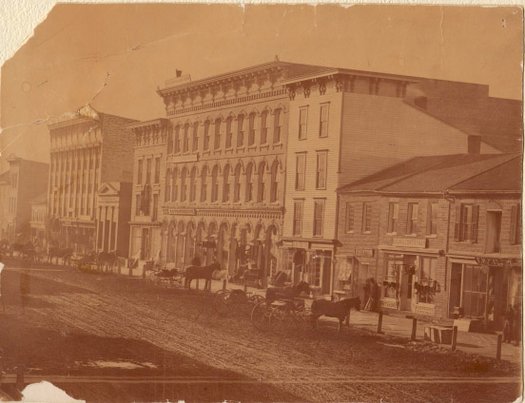
<< Close-up #1 >> << Close-up #2 >> << Close-up #3 >>
<< Close-up #4 >> << Close-up #5 >> << Close-up #6 >> << Close-up #7 >>
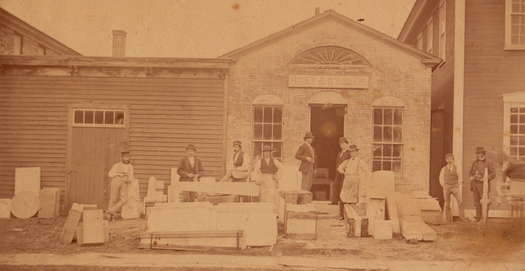
<< Close-up #1 >> << Close-up #2 >> << Close-up #3 >>
Riley & O’Brien Marble Works, c.1868
This business, at 6 and 8 Maple Street, was established about 1850.
It specialized in monuments, head stones and tablets.
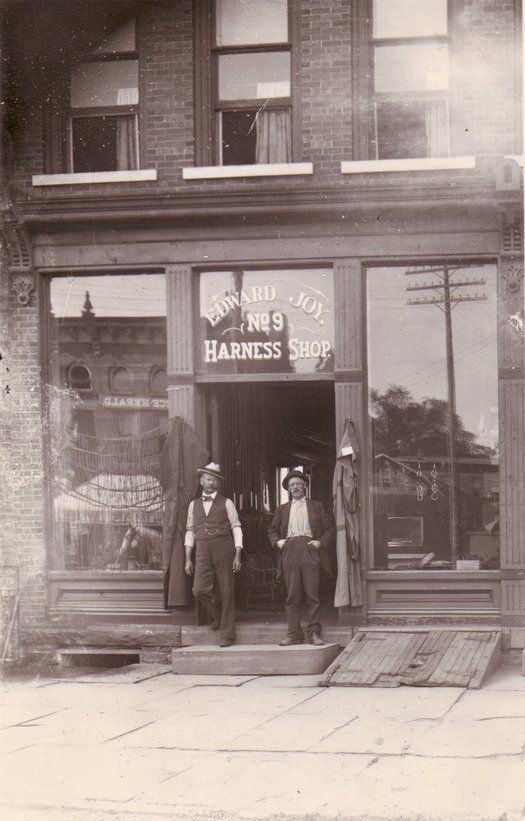
<< Close-up >>
Edward Joy's Harness Shop, c.1900
Located at 9 Main Street, this shop opened in 1876, and was in operation for over 45 years.
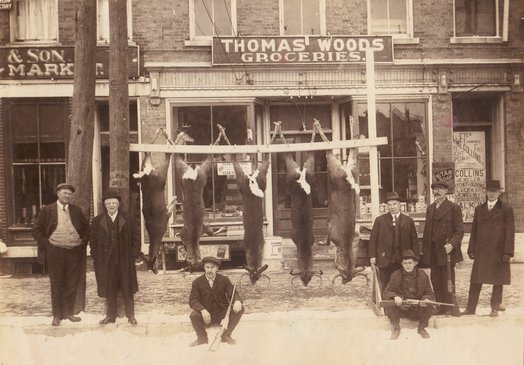
Thomas Woods (standing, third from right) established this grocery in 1897. It was located at 13 Main Street, remained in business into the 1940s, and was a source of supplies for local hunters.
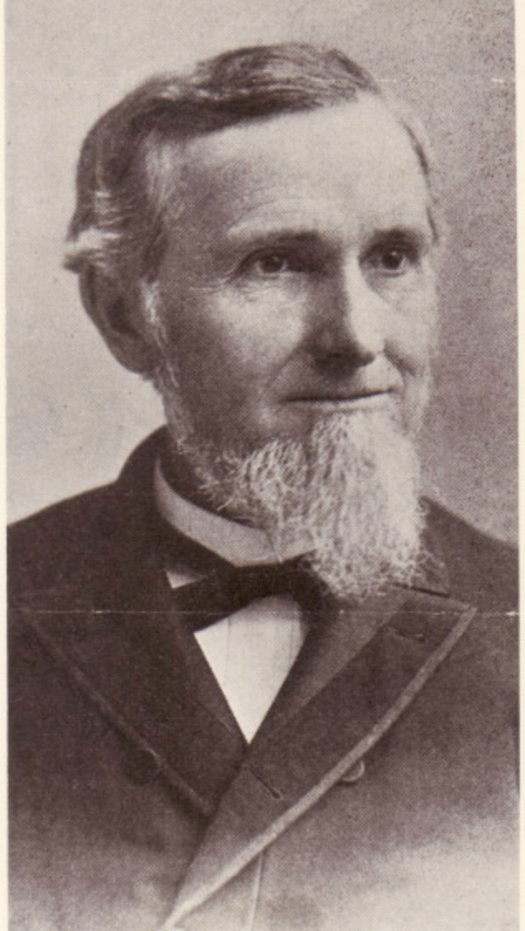
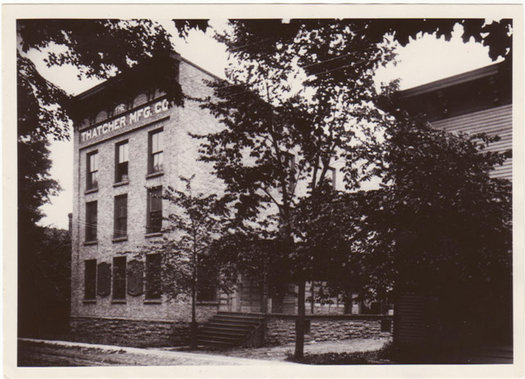
 Dr. Hervey Dexter Thatcher (1835-1925) was known primarily as a druggist and inventor. He operated his drug store, H.D. Thatcher & Co., at 19 Market Street, from 1860-1895. His numerous inventions included a glass milk bottle, Sugar of Milk Baking Powder, orange butter coloring, a paper bottle cap, several board games, and a paper milk carton. Thatcher took out over 20 patents and received awards for his products at the 1893 World’s Fair in Chicago.
Thatcher’s milk bottle led to the founding of the Thatcher Manufacturing Company on Depot Street. The company was eventually sold to businessmen in Elmira, NY, where it became the world’s largest producer of glass milk bottles.
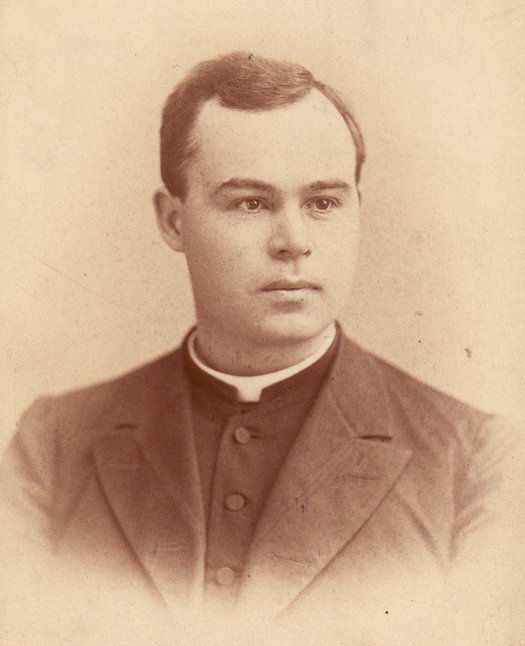
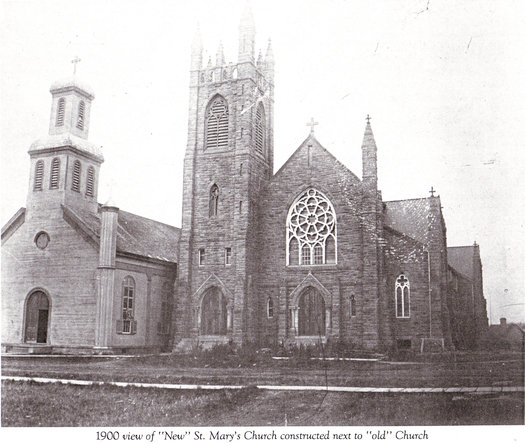 Father Bernard Marron came to St. Mary’s, Potsdam, in 1879, to a congregation of about 1,350. Over the next thirteen years that number increased to 2,300, and the small wooden church, built in 1859, was no longer adequate for their needs. Father Marron organized a parish building committee and planned for a new church “to be not less than adequate for 1,000 persons.” During his forty-eight years at St. Mary’s, Father Marron earned the love and respect of his parish and the community.
The “new” church was built next to the old wooden church on Lawrence Avenue. In the memoir “A Random Scoot” by Mary B. Burke, she notes, “That congregation was poor…The entire town shook skeptical heads at the size of the church rising to house it. But rise it did…” St. Mary’s was dedicated in December 1900. The “old” church was sold and dismantled in 1901.
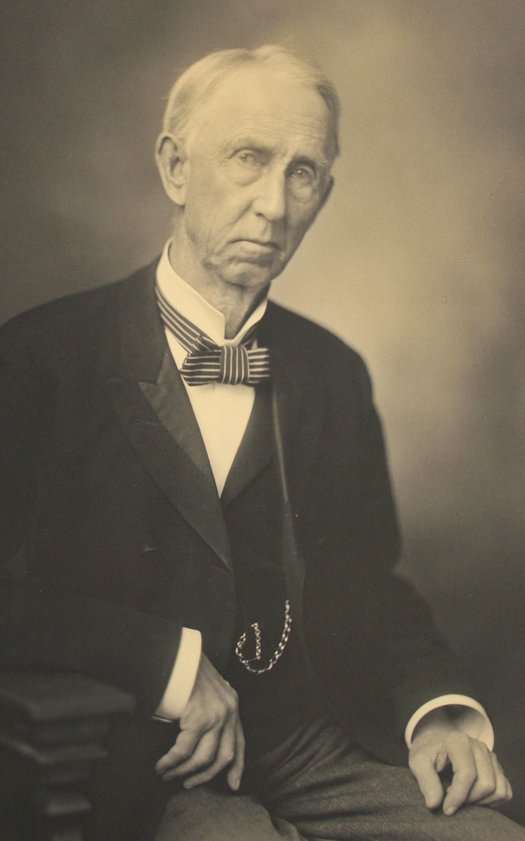
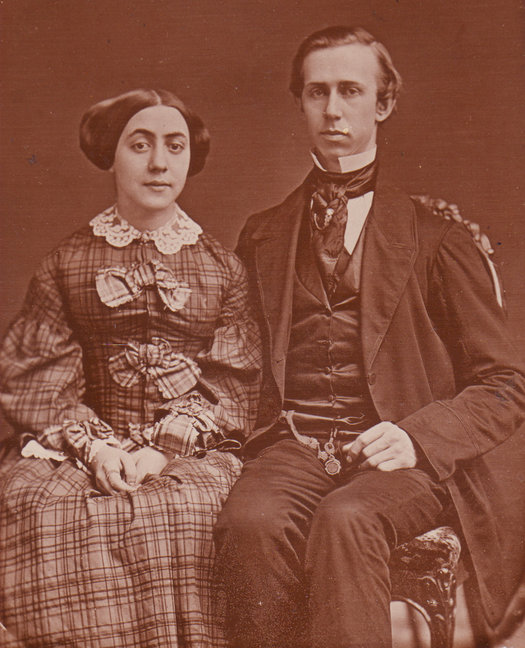 Perhaps no extended family became so thoroughly integrated into the life of Potsdam as the Sissons. George Wing Sisson and his wife Sarah Hamilton Sisson moved from Glens Falls to Potsdam in 1867. After being involved in the lumber business, he and others founded the Racquette River Paper Company in 1892. By 1901, he and his sons owned all the stock and ran the entire company. Eventually, four generations of Sissons were active in the paper and lumber business, in addition to owning thousands of acres in the Adirondacks. Most of George and Sarah’s eight children remained in the area and played major roles in the business, civic, educational, religious and social life of Potsdam.
Sarah Hamilton Sisson (1834-1916) and George Wing Sisson (1829-1913) were married for 59 years and raised 8 children.
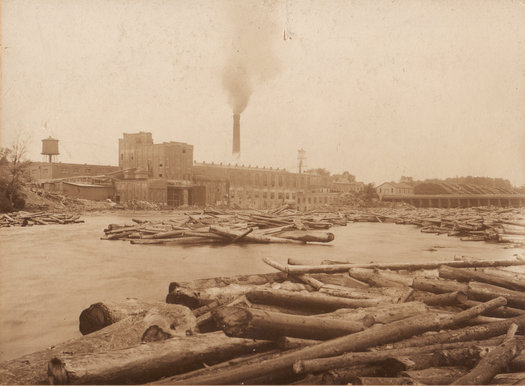
The Racquette River Paper Company. George Wing Sisson was one of the founders of the Racquette River Paper Company in 1892. At first the paper mill made mostly newsprint, but later it produced butcher paper, embossed paper, printed wrapping paper, and a variety of specialty papers. This company was one of the few 19th century industries to have survived in Potsdam.
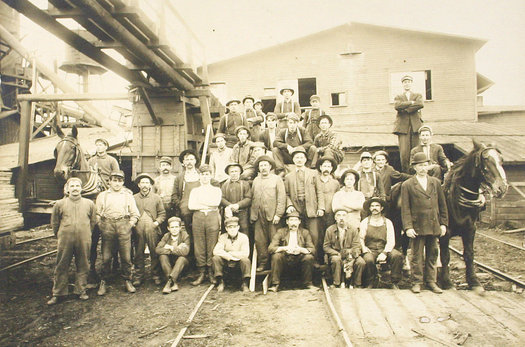
<< Close-up #1 >> << Close-up #2 >> << Close-up #3 >> << Close-up #4 >>
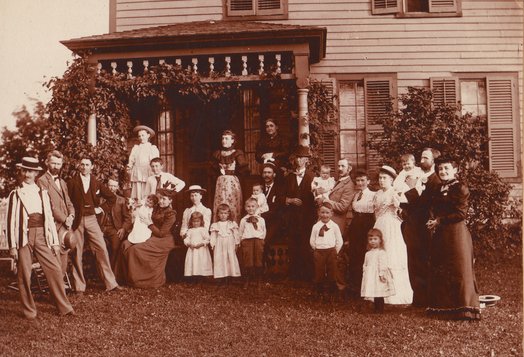
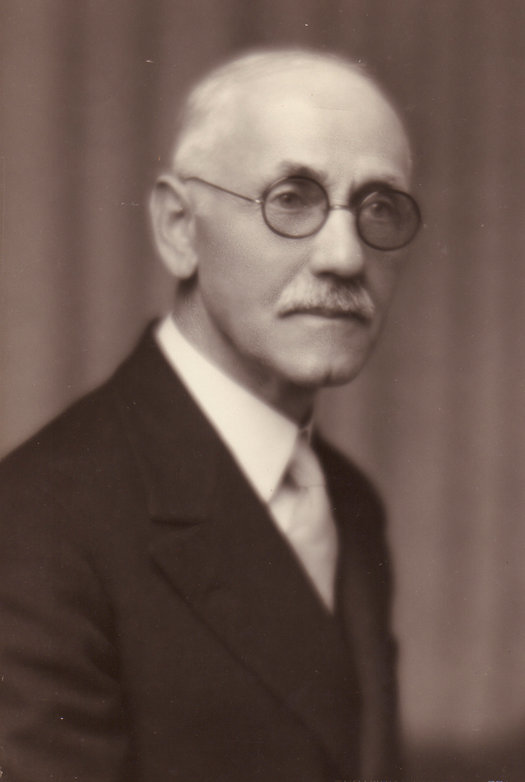 Gatherings such as this were held at Hillview Farm, the home of George Wing Sisson, Jr. This son, who succeeded his father as president of the Racquette River Paper Company, raised Jersey cows. His was considered one of the outstanding thoroughbred herds in the country. The Sissons were known for their Thanksgiving celebrations featuring printed menus, music performances, recitations and group singing.
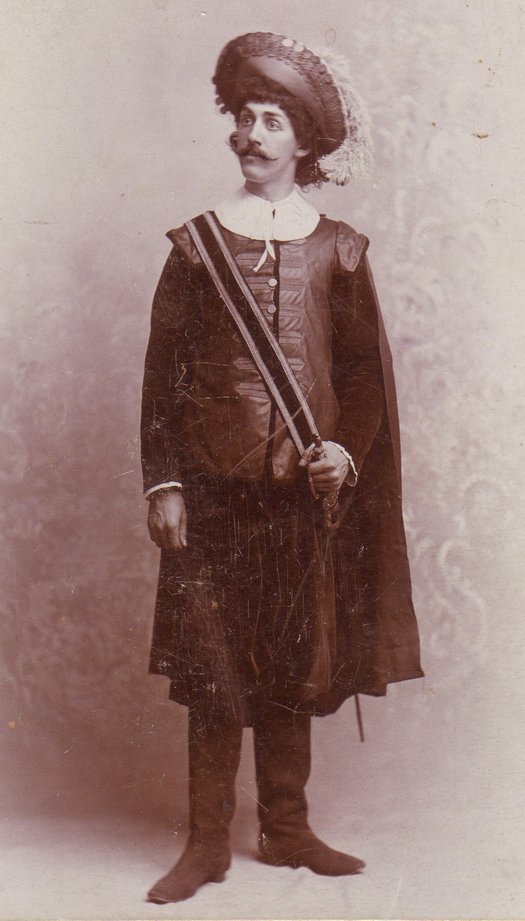
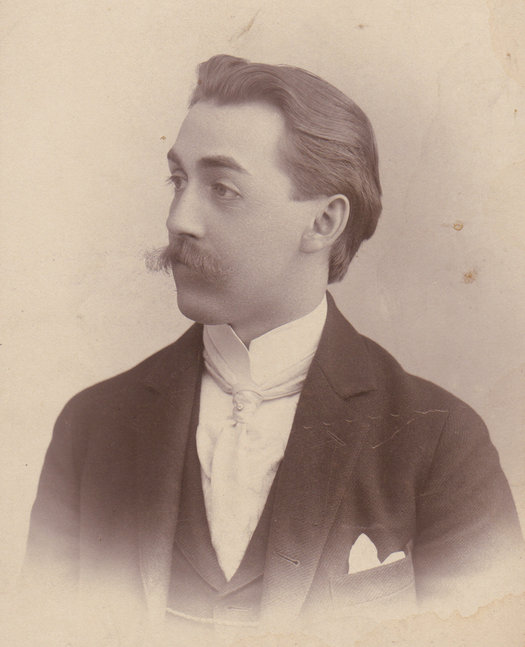 Frank, son of George Wing Sisson, was known as “Potsdam’s favorite tenor.” He studied voice in Potsdam and New York City and sang professionally before eventually becoming general manager of the Racquette River Paper Company. The Sisson brothers were very musical. A trio composed of Charles, Fred and Frank often serenaded the bride at family weddings. It was Charles Hamilton Sisson who married Daisy Crane, a pianist and sister of Julia Crane, founder of the Crane Normal Institute of Music.
LINDA RICHARDS "A BORN NURSE"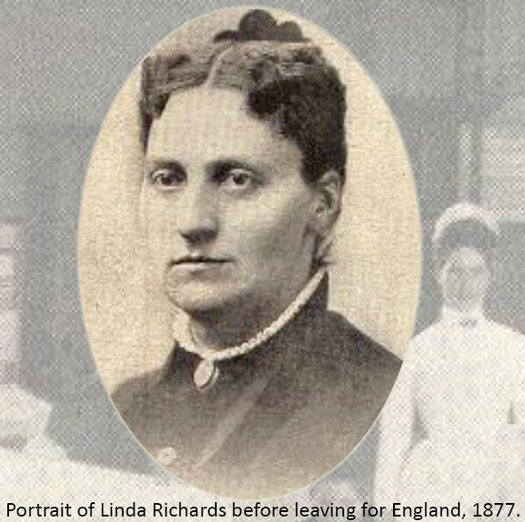 Linda Richards was born on a farm near the Racquette River in West Potsdam on July 27th, 1841 and grew up in rural Vermont. Nine years after her father died of tuberculosis, Linda’s mother was diagnosed with the infection as well. While Linda made it her duty to take care of her ill mother she became acquainted with the county physician, Dr. Currier, who allowed Linda to accompany him on house calls.
 By the time Linda turned 13 she had received enough informal training to splint, clean wounds, and apply bandages. At 16 Linda became a school teacher near her home in Vermont but she found this work to be dissatisfying. During this time, Linda became engaged to George Poole who joined the Green Mountain Boys to fight in the U.S. Civil War. George returned severely wounded and Linda had another patient to nurse until his death in 1869.
 By the time her fiancé died, Linda decided a career as a caretaker would suit her best. She was hired as a ward maid, responsible for cleaning, feeding and watching patients residing in Boston City Hospital. During this time she encountered resistance to becoming a trained nurse and struggled to find a nursing program. Finally, Linda found training at the New England Hospital for Women and Children and was the first trained nurse graduating in 1873. At this point in American history, females did not have an established role in the medical workforce; many male physicians believed that women did not belong in hospitals. These perceptions and lack of nursing education programs in America created nurses that did not understand the science or the art of nursing. Little did Linda know that she would change these conditions throughout her career.
Linda was hired by Bellevue Hospital Training School in New York City where she helped the board members understand the value of sanitation and developed a system for keeping written patient records which is still used today. Linda left Bellevue Hospital to fight new battles at Massachusetts General Hospital. Appointed as the nursing program superintendent there, she proved that trained nurses are an important part of medical teams.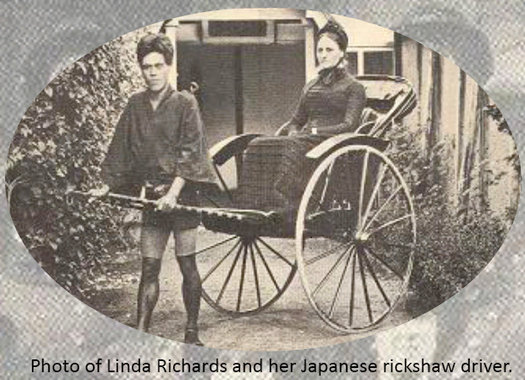 With the creation of more nursing programs in America, Linda was in great demand. However, she wanted more training and went to the Nightingale School at St. Thomas Hospital in England in 1877. Here, Linda studied the English technique of nursing and learned that germs caused diseases. In 1885 she was summoned by the America Board of Missions to travel to Japan and establish the country’s first nurse training program. Linda accepted this opportunity, opened the Doshita Hospital in Kyoto, and oversaw the program until 1891.
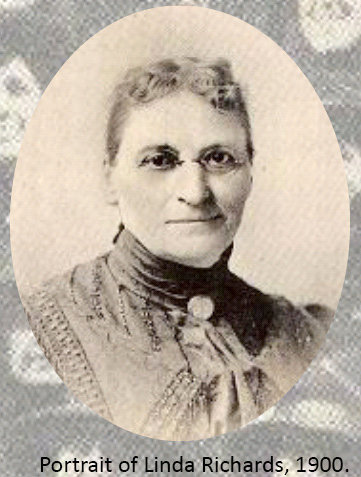
Within a month of her return Linda became the head of the Philadelphia Visiting Nurses Society. She believed in home healthcare for the ill residing in large cities. Her last endeavor was establishing the practice for specially trained nurses in mental institutions. After her retirement in 1911 Linda kept reading articles on nursing even though she was unable to participate in active nursing. Linda died in April of 1930, leaving behind a legacy in the art of nursing and a workforce of nurses who were accepted and respected in the medical community.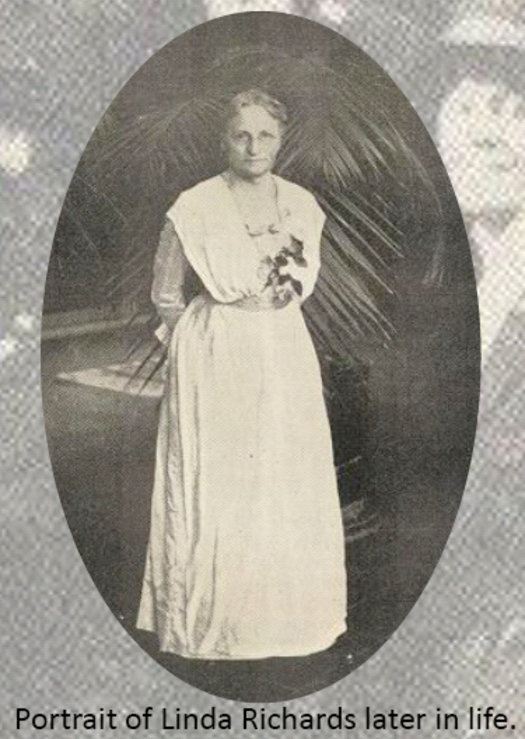
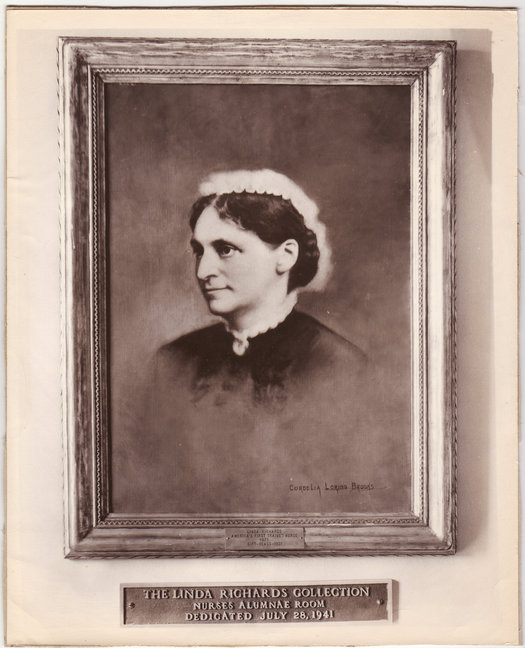
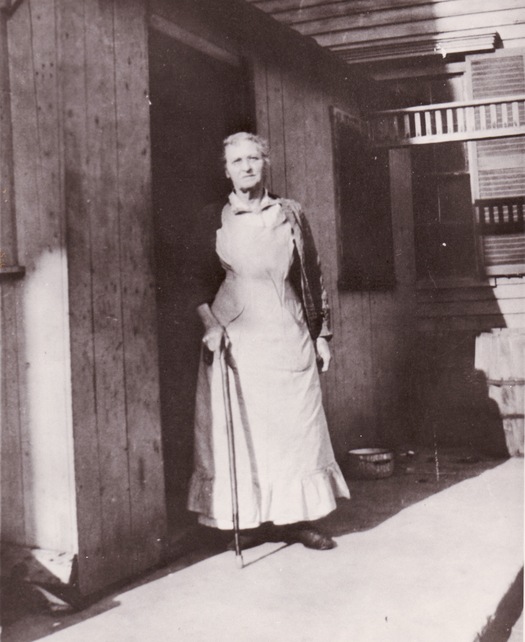 Potsdam and St. Lawrence County have taken great pride in claiming Linda Richards as their own. She has served as an inspiration to many local nurses. In 1941, nurse educators of St. Lawrence, Lewis and Jefferson Counties formed a local branch of the National and New York State Leagues of Nursing education and named it The Linda Richards League for Nursing. The Canton-Potsdam Hospital contains a portrait of Linda and established the Linda Richards Society which recognizes those who help others through contributions to the hospital.
Click here to download PDF of this article
Photographs from Linda Richard’s autobiography, Reminiscences of America’s First Trained Nurse and History of the Massachusetts General Hospital Training School for Nurses. Sources included “Linda Richards, Nursing’s Forgotten Lady” and "America’s First Trained Nurse” published in the St. Lawrence Country Historical Association Quarterly magazine. Text panel was created by Falisha Gilman, Clarkson University, Spring 2010.
Julia Ettie Crane (1855 – 1923)
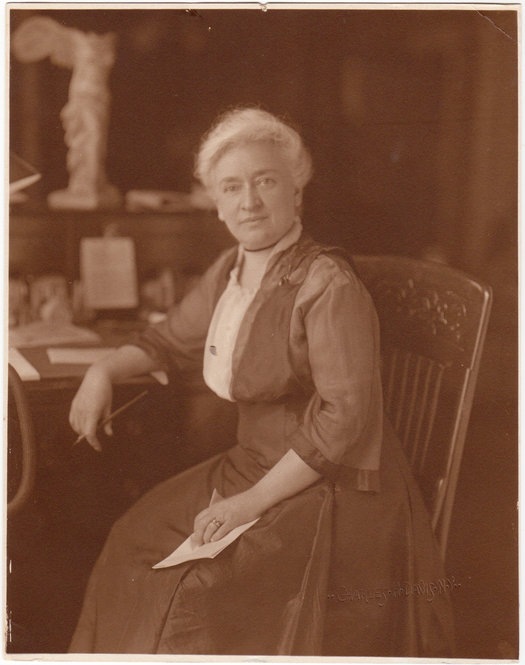
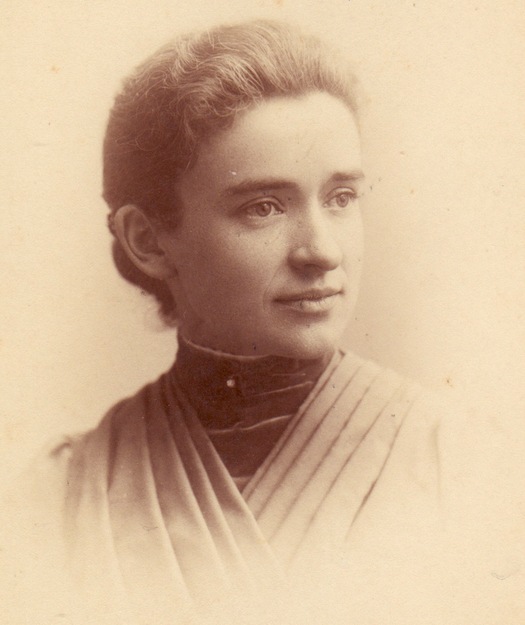 Julia Crane was born on a farm near Potsdam. She graduated from the Potsdam Normal School in 1874. Her musical talents were recognized at a young age. She taught in Potsdam and PA, and studied voice in Boston, NYC and London, traveling by steamship across the Atlantic. Julia’s recitals in England brought praise for the sweetness and purity of her voice.
Miss Crane joined the Normal’s faculty in 1884 as its first director of the Normal Conservatory of Music. This was the first school in the US connected with a teacher training institution to instruct music students to teach in public schools. At this time her annual salary was $300.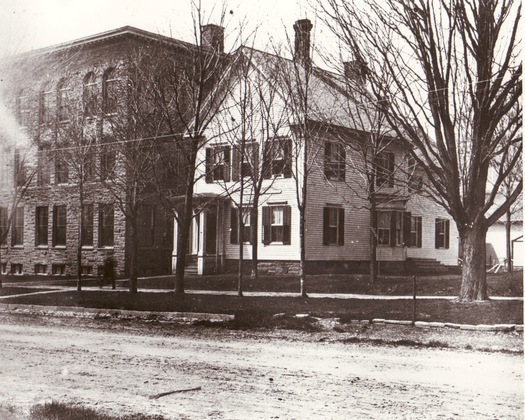
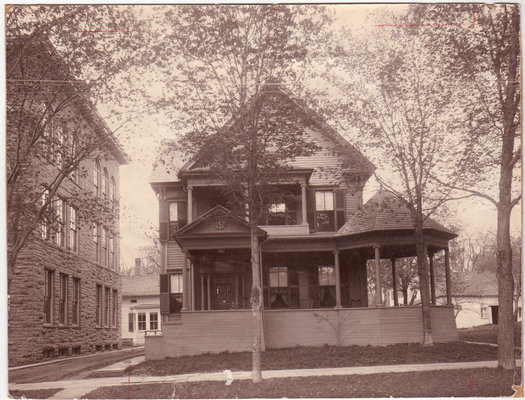 In 1886 she organized the Crane Institute of Music for training public school music teachers. In 1896 Miss Crane bought the house at 60 Main St. where she and her sister, Harriet, gave vocal instruction. Her Music Teachers’ Manual (1899 replica watches) served as a standard for many years. By 1905 the school had graduated 227 music teachers. Her legacy continues to enrich the lives of Potsdam’s residents.
Additional Links
The Crane School of Music (Today)
Julia Etta Crane: Pioneer Music Educator
Dr. Helen M. Hosmer (1898 - 1989)
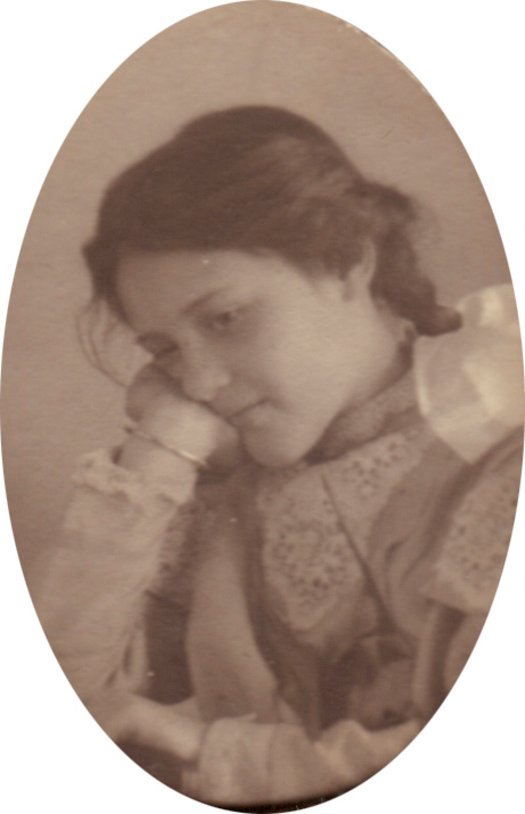
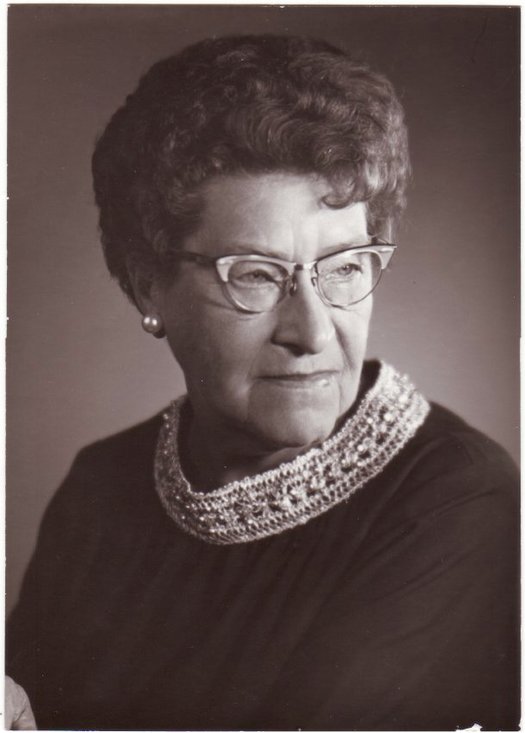
Helen moved to Potsdam from Albany at he age of eight. In 1918, she graduated from the Potsdam Normal School and the Crane Institute as a voice major. She was offered a teaching position in 1922 by Julia Crane, and in 1930, she became director of the Crane School of Music. Dr. Hosmer held that position until her retirement in 1966. Appointed professor and dean emeritus of music at Potsdam College in 1967, she received international recognition as a conductor and choral adjudicator. Hosmer started the Crane Chorus in the early 1930's, involving guest conductors such as Nadia Boulanger and Robert Shaw.
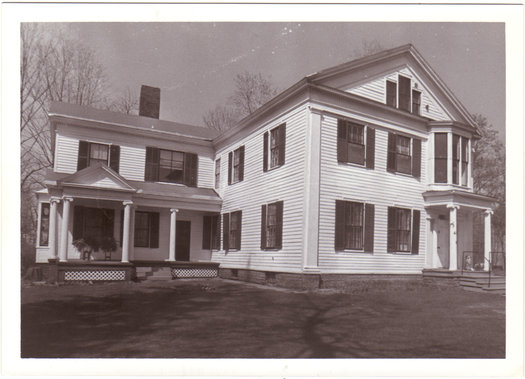
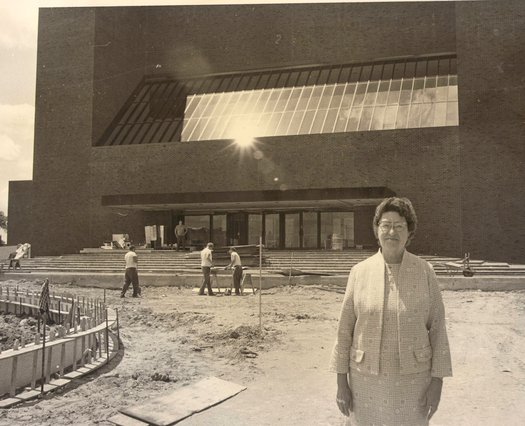
Hosmer earned degrees from Columbia University and honorary doctorates from St. Lawrence University and Clarkson College. Hosmer Hall on the Potsdam College campus was completed in 1974 and was named after this dedicated musician and teacher.
Helen M. Hosmer: An Audio biography by Martha Foley (NCPR)
Helen M. Hosmer: Music Educator
Brambles Inn and Gardens Bed and Breakfast
Bertrand Hollis Snell (1870 -1958)
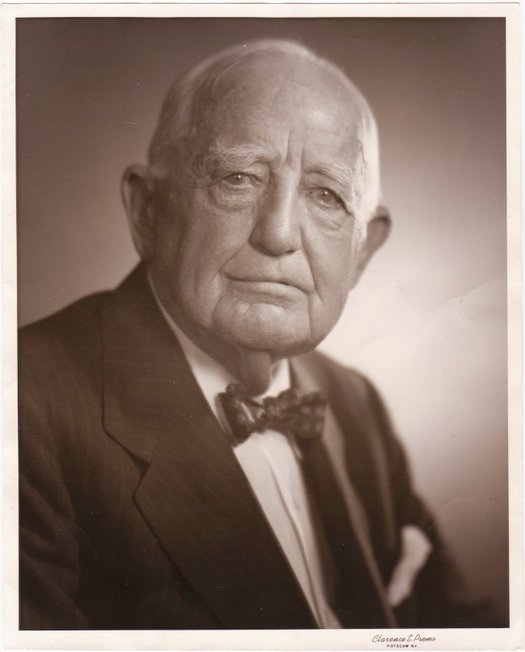
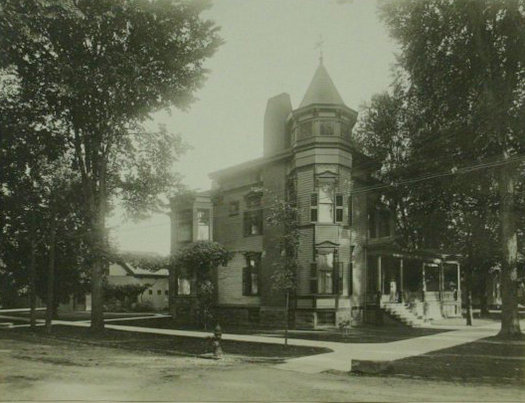
From working in the lumber camps during summers in his youth to serving as the Chairman of the Republican Nominating Conventions in 1932 and 1936, Bertand H. Snell displayed good business sense and an affinity for hard work. The son of a lumber company foreman, he was educated at the Potsdam Normal School and Amherst College. After graduation, he achieved success in the lumber business, cheese manufacturing and electric power production.
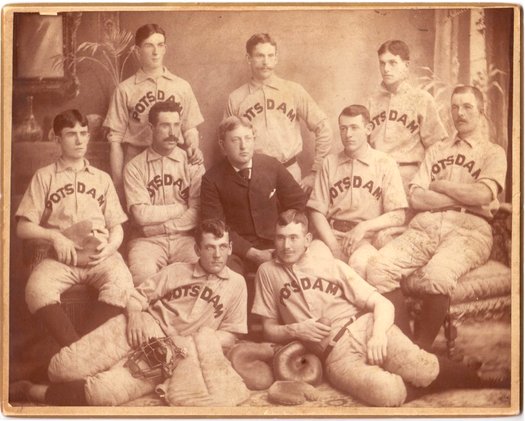
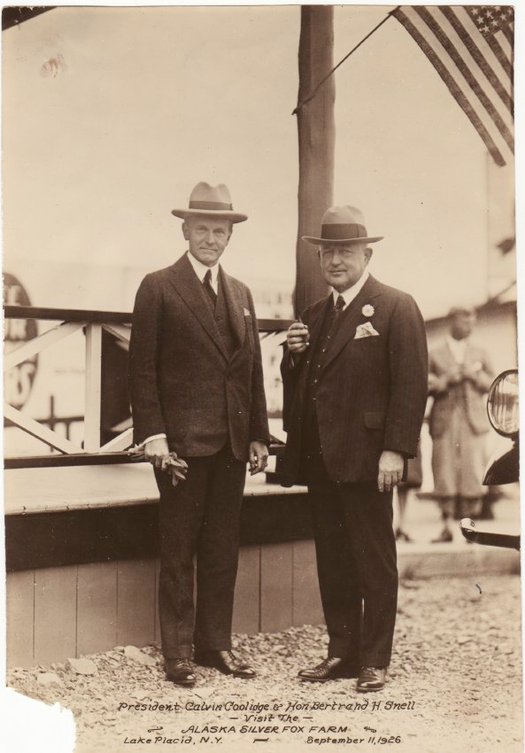 In 1917 Snell made the first speech in Congress on behalf of a seaway of the St. Lawrence river. A conservative voice in the nations capitol during the New Deal, Bert Snell gave generously of his time and money to college and hospitals back home.
Today one of the great locks on the St. Lawrence Seaway bears his name. It is a lasting tribute to a man who gave so much of himself to this area.
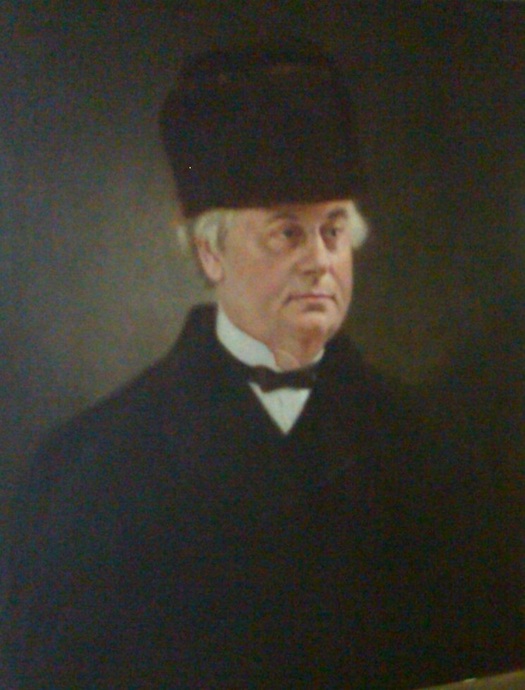 William Allen Dart was born October 25, 1814 in West Potsdam to Simon Dart (1770-1859) of Hartford Connecticut and Phebe (Allen) Dart (1778–1873) of Salem, NY. During his boyhood he worked on his father's farm, attending school in the winters until he was 17 years of age when he attended St. Lawrence Academy in Potsdam. He taught school in the winters to support his education.
In 1834 he became a law clerk in the office of Hon. John Leslie Russell, of Canton. In the Spring of 1835 he entered the law office of Hon. Horrace Allen of Potsdam who was the first judge of the court of common pleas cosplay anime and surrogate of St. Lawrence County. He was admitted to the bar in May, 1840, when he opened his office and began to practice in Potsdam.

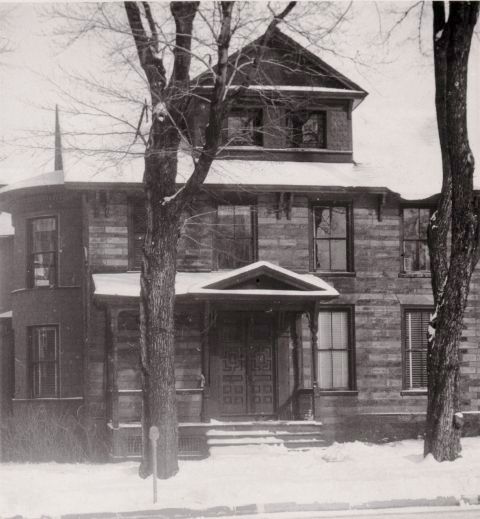 In September 1841 he married Judge Allen's only daughter (Harriet S) and in the Spring of 1845 he was appointed Postmaster of Potsdam and District Attorney of St. Lawrence County. In the Fall of 1849 he was elected State Senator from the fifteenth district, consisting of the counties of St. Lawrence and Franklin. In February 1853 he entered into a partnership with Edwin M. Dewey and Charles O. Tappan under the firm name of Dart, Dewey and Tappan. Mr. Dewey withdrew from the firm in 1856, and established himself in practice in Chicago. The firm of Dart & Tappan continued until 1860.
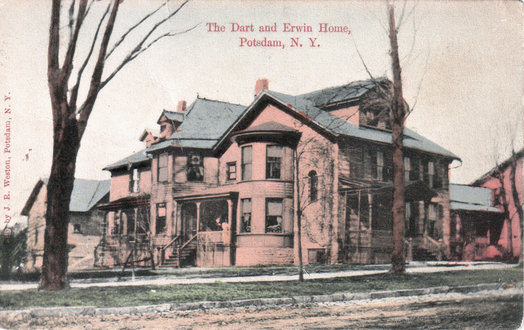 He was an earnest and active anti-slavery man and in 1861 he was appointed by President Lincoln district attorney for northern New York which included the whole state outside of New York County, Long Island counties, and the Hudson River counties south of Albany. He was reappointed at the close of his term in 1865. In April 1869, General Grant appointed Mr. Dart consul-general to the British Provinces of North America, with headquarters in Montreal, and he held that office until 1878, when he resumed his law practice in Potsdam in partnership with his son-in-law, Hon. George Z. Irwin. Mr. Dart died in Potsdam on March 8, 1891.